Saturday, May 29, 2010

Sacred Mountain Everest

Sacred Mountain Everest, by Christine Taylor-Butler (Lee & Low)

This is a long-overdue Cybils review, but let's start with the important question: how did I not know that Edmund Hillary was a beekeeper until I read this book?

Sacred Mountain Everest is a very cool book, covering some of the familiar history while giving full credit to the Sherpas who made the climbs alongside the famous names.

Seeing the author tweet this, six months after I read the book? Also very cool:

Thursday, May 13, 2010

10-10-10 Challenge update


As of this week. Clearly I've got some work to do.

1. Shakespeare-related (2/10)
Shakespeare: The World As a Stage, Bill Bryson
Contested Will: Who Wrote Shakespeare?, James Shapiro

2. Poetry (0/10)

3. Biography (1/10)
Shakespeare: The World As a Stage, Bill Bryson

4. Contemporary young adult (8/10)
Sweet, Hereafter, Angela Johnson
A Wish After Midnight, Zetta Elliott
The Clearing, Heather Davis
The Things a Brother Knows, Dana Reinhardt
The Six Rules of Maybe, Deb Caletti
Extraordinary, Nancy Werlin
Kissing Tennessee, Kathi Appelt
My Most Excellent Year, Steve Kluger

5. Children's non-fiction (3/10)
Honeybees: Letters From the Hive, Stephen Buchmann
The Boys' War, Jim Murphy
How Do You Go to the Bathroom in Space?, William Pogue

6. Science fiction (1/10)
Twenty Thousand Leagues Under the Sea, Jules Verne

7. History (9/10)
Unsettled: An Anthropology of the Jews, Melvin Konner
The Boys' War, Jim Murphy
The Imperial Cruise, James Bradley
Blood and Thunder, Hampton Sides
Playing the Enemy, John Carlin
The Guns of August, Barbara Tuchman
Helluva Town, Richard Goldstein
Hellhound on his Trail, Hampton Sides
A Nation Rising, Kenneth C. Davis

8. Mystery (5/10)
Poirot Investigates, Agatha Christie
The Seven Dials Mystery, Agatha Christie
The Mapping of Love and Death, Jacqueline Winspear
The Weed That Strings the Hangman's Bag, Alan Bradley
A River in the Sky, Elizabeth Peters
The God of the Hive, Laurie R. King

9. Written before 1900 (2/10)
Robinson Crusoe, Daniel Defoe
Twenty Thousand Leagues Under the Sea, Jules Verne

10. Pulitzer winners (2/10)
Among Schoolchildren, Tracy Kidder
The Guns of August, Barbara Tuchman

Tuesday, May 4, 2010

You though I forgot about Jane, didn't you?

Forgot, no. Lazy? I plead the fifth.

We've reached the fourth chapter of Miss Eyre's autobiography, in which the Black Pillar is introduced. That would be Mr. Brocklehurst, of course, and if this were Rocky Horror, now would be the time to throw stuff at the screen -

Mrs. Reed has summoned Mr. Brocklehurst to Gateshead because she's decided she must get the Eyre child away from her little darlings. ("They are not fit to associate with me," our girl snaps one day.) Jane spends two and a half months in a sort of limbo - deliberate religious reference, courtesy of the pretty sharp satire in this chapter - before the villain appears.

(And as Bronte sets the stage for his appearance, she breaks into a delightfully snarky portrait of Eliza Reed:
"She had a turn for traffic, and a marked propensity for saving; shown not only in the vending of eggs and chickens, but also in driving hard bargains with the gardener about flower-roots, seeds, and slips of plants...Eliza would have sold the hair off her head if she could have made a handsome profit thereby. As to her money...Eliza, fearful of one day losing her valued treasure, consented to intrust it to her mother, at a usurious rate of interest—fifty or sixty per cent.; which interest she exacted every quarter, keeping her accounts in a little book with anxious accuracy."
Just in case you thought she was meant to be a sympathetic character.)

Okay, back to the Big Bad Wolf.

You laugh? Look at how he's described, and tell me that "Grandmother, what big teeth you have" doesn't complete the series:
"What a face he had, now that it was almost on a level with mine! what a great nose! and what a mouth! and what large prominent teeth!"
And he, charming man, proceeds to quiz Jane on why she's such a wicked girl, and what happens to disobedient children, and other cheerful topics, making reference to the "Child's Guide" and its tales of awful things that happen to bad children. The "Child's Guide" was a play on the "Children's Friend," a periodical published by the real-life inspiration for Mr. Brocklehurst.

Bronte gets in one more dig at the distinguished clergyman before the scene closes: "Consistency, madam, is the first of Christian duties," he says. Uh huh. Matthew 22:38 says something a little different, and Bronte's readers were no doubt familiar with that verse.

Tuesday, April 27, 2010

Product placement that worked

(Sort of.)

In Lynda Sandoval's Who's Your Daddy?, one of my favorite overlooked YA books of the past few years - although it looks like S&S rereleased it with a new cover in 2008, so maybe it wasn't as overlooked as I thought - I was introduced to OPI.

(PSA: OPI's website is a Flash monstrosity that seems to have caused a certain amount of havoc in Firefox. Sephora's site might be a better choice if you want to check out the offerings.)

Specifically, the pun-tastic names that OPI gives its nail polish colors:
"Caressa was bent low over my feet, painting my toenails with this sweet OPI shade she'd just bought, 'I'm Not Really a Waitress.' It's kind of a red with sparkly gold in it. I had a hard time deciding between that and another shade from OPI's European collection called 'Amster-Damsel in Distress,' but the gold shimmer in 'Waitress' really won me over."
The names were what won me over. I can't think of another instance in which I've become a fan of a brand just because it appeared in a book.

Even this book - there's a fair amount of brand-dropping, but the references to Lucky Brand jeans didn't do it for me.

You want more examples? How about "A Good Man-Darin is Hard to Find?" "Curry Up Don't Be Late?" "Pinko de Gallo?"

Now, it's been the better part of a decade since I actually bought nail polish, so OPI hasn't been benefiting much from my enthusiasm. But when I do get my nails done, I choose from the OPI selection - and I make sure I like the name before I decide on a color.

There's a small bit of anecdata for you.

Thursday, April 8, 2010

Buy books (for someone else)


Lots of someones, in fact - the students at Ojo Encino Day School on the Navajo Nation, and Alchesay High School on the White River Apache Reservation. Guys Lit Wire and readergirlz are once again rocking the philanthropy, and they've compiled huge lists of books these kids want.

Go read more, and donate some books.


(Side note: I know. Not a real post. We'll get back to Miss Eyre, Cybils books I still haven't gotten around to reviewing, and why I look for OPI nail polish soon.)

Sunday, March 21, 2010

Chapter 3: In Which Mr. Lloyd Foreshadows


When we left Jane, she had just collapsed in the red room. In chapter 3, she's been removed to her own bed, and Charlotte Bronte throws in another atmosphere-setting zinger:
I felt an inexpressible relief, a soothing conviction of protection and security, when I knew that there was a stranger in the room, an individual not belonging to Gateshead, and not related to Mrs. Reed.
This is a ten-year-old girl, remember. And what it takes for her to feel safe is the presence of a stranger.

The stranger is Mr. Lloyd, the local apothecary (the lowest rung of the medical profession at the time; if you don't know this, the fact that Mrs. Reed calls in a physician for herself doesn't have the same impact). He's there to check in on Jane, who's had a bit of a fright.

And then we get one of the moments where Jane actually seems like a child, as she contemplates Gulliver's Travels:
This book I had again and again perused with delight. I considered it a narrative of facts, and discovered in it a vein of interest deeper than what I found in fairy tales: for as to the elves, having sought them in vain among foxglove leaves and bells, under mushrooms and beneath the ground-ivy mantling old wall-nooks, I had at length made up my mind to the sad truth, that they were all gone out of England to some savage country where the woods were wilder and thicker, and the population more scant; whereas, Lilliput and Brobdignag being, in my creed, solid parts of the earth’s surface, I doubted not that I might one day, by taking a long voyage, see with my own eyes the little fields, houses, and trees, the diminutive people, the tiny cows, sheep, and birds of the one realm; and the corn-fields forest-high, the mighty mastiffs, the monster cats, the tower-like men and women, of the other.
Mr. Lloyd comes back for a chat, and the reader is given the first hint that Jane might have family beyond the walls of Gateshead:
"Have you any relations besides Mrs. Reed?"

"I think not, sir."

"None belonging to your father?"

"I don’t know. I asked Aunt Reed once, and she said possibly I might have some poor, low relations called Eyre, but she knew nothing about them."

"If you had such, would you like to go to them?"

I reflected. Poverty looks grim to grown people; still more so to children: they have not much idea of industrious, working, respectable poverty; they think of the word only as connected with ragged clothes, scanty food, fireless grates, rude manners, and debasing vices: poverty for me was synonymous with degradation... I was not heroic enough to purchase liberty at the price of caste.

We've touched on Jane Eyre as a book that endorses revolutionary ideals, but it's a revolution that takes place very much within the landed classes. Bronte was not a fan of Jane Austen, but I think there's a good chance our Jane and Fanny Price would have agreed on the undesirability of poor relations.

Mr. Lloyd continues to act as a one-man foreshadowing show when he asks Jane if she'd like to go to school. Poor girl doesn't know what she's letting herself in for, but we'll see, starting in the next chapter.

Even with all the pathos in this chapter, the deadpan humor is still there, particularly in this line from the narrator:

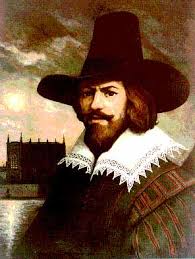
Abbot, I think, gave me credit for being a sort of infantine Guy Fawkes.
Hmm. That's a mash-up that no one's tried yet. Anyone up for Jane Eyre and Gunpowder?

Where the name came from

Just moving this off the sidebar and into a post:

'
That Greek one, then, is my hero
who watched the bath water

Rise above his navel, and rushed
out naked, 'I found it,

I found it' into the street
in all his shining and forgot

That others would only stare
at his genitals.

What laughter!'

- Dannie Abse