Showing posts with label jane austen. Show all posts

Thursday, August 23, 2012

Holmes Project: The Adventure of the Dancing Men

This time we're opening with a bit of authorial soliloquizing on Watson's part:
"Holmes had been seated for some hours in silence with his long, thin back curved over a chemical vessel in which he was brewing a particularly malodorous product. His head was sunk upon his breast, and he looked from my point of view like a strange, lank bird, with dull gray plumage and a black top-knot."
And then the strange, lank bird proceeds to explain to Watson how it's totally obvious he's not going to be investing in South African securities -- which, by the way, seem to be a favorite choice of Conan Doyle's investment-minded characters.

By the time his little game is over, the latest client has arrived, a Mr. Hilton Cubbitt, "a tall, ruddy, clean-shaven gentleman, whose clear eyes and florid cheeks told of a life led far from the fogs of Baker Street."

Holmes sets up the framing this time: "You gave me a few particulars in your letter, Mr. Hilton Cubitt, but I should be very much obliged if you would kindly go over it all again for the benefit of my friend, Dr. Watson." And so Cubbitt gets to tell his own story, although he begins by denigrating his own narrative abilities. Always fake confidence, Hilton. It's the secret of success.

But actually, he starts off by giving us a clue. It doesn't seem that way at first, just an example of the traditional emphasis on family connections, but in this case it turns out to matter.
"I'll begin at the time of my marriage last year, but I want to say first of all that, though I'm not a rich man, my people have been at Riding Thorpe for a matter of five centuries, and there is no better known family in the County of Norfolk... You'll think it very mad, Mr. Holmes, that a man of a good old family should marry a wife in this fashion, knowing nothing of her past or of her people, but if you saw her and knew her, it would help you to understand."
Just in case you don't understand straight off that one of the themes of the story is the value of maintaining family pride -- and Englishness -- Conan Doyle keeps hammering the point.
"He was a fine creature, this man of the old English soil—simple, straight, and gentle, with his great, earnest blue eyes and broad, comely face. His love for his wife and his trust in her shone in his features."

"She has spoken about my old family, and our reputation in the county, and our pride in our unsullied honour"

"Dear, dear, one of the oldest families in the county of Norfolk, and one of the most honoured."
Also of note: Mrs. Hudson makes an appearance here only in a most indirect fashion:
"Ah! here is our expected cablegram. One moment, Mrs. Hudson, there may be an answer."
We're back in the Austen zone of servants who spend most of the story invisible.

The actual mystery here is of less interest to me than the sociological aspect. Short version, Holmes cracks a murder case by solving a substitution cipher that involves the dancing men of the title -- not too difficult for someone who's written "a trifling monograph upon the subject."

Wednesday, August 22, 2012

Holmes Project: The Adventure of the Norwood Builder

Holmes gets to speak first in this story. What does he do with his opener? He bemoans the lack of criminal masterminds since he got rid of Moriarty.
"With that man in the field, one's morning paper presented infinite possibilities. Often it was only the smallest trace, Watson, the faintest indication, and yet it was enough to tell me that the great malignant brain was there, as the gentlest tremors of the edges of the web remind one of the foul spider which lurks in the centre. Petty thefts, wanton assaults, purposeless outrage—to the man who held the clue all could be worked into one connected whole. To the scientific student of the higher criminal world, no capital in Europe offered the advantages which London then possessed."
When he puts it like that, he's almost got a point, you know?

Before the substance begins, Watson tosses in another reminder that in this version of London, all the stuff that he writes about really happened:
"His cold and proud nature was always averse, however, from anything in the shape of public applause, and he bound me in the most stringent terms to say no further word of himself, his methods, or his successes—a prohibition which, as I have explained, has only now been removed."
And then the client arrives, introducing himself as "the very unhappy John Hector McFarlane."

To which Holmes replies with both a put-down and a demonstration of his own abilities: "You mentioned your name, as if I should recognize it, but I assure you that, beyond the obvious facts that you are a bachelor, a solicitor, a Freemason, and an asthmatic, I know nothing whatever about you."

You can't beat the English when it comes to putting a person in his place.

What Holmes' itinerary doesn't include is that McFarlane is also accused of murder, which is of course the bit that appeals here: "This is really most grati-- most interesting."

Conan Doyle chooses the form of a newspaper article to convey the salient details, but McFarlane is the one reading the paper aloud, so in a way he's telling his own story, in headline format. Watson gets to read the actual text of the article. It's very long, so here's the short version: Jonas Oldacre is missing, presumed dead, and McFarlane, his last known visitor, is the leading suspect.

Inspector Lestrade arrives before we return to McFarlane's story, this time in his own words. Because there's one other crucial detail here: Oldacre hired McFarlane, out of the blue, to prepare a will in which he leaves all his possessions to McFarlane, despite the fact that they had never met.

Lestrade is ready to wrap up the case right there, but Holmes delivers another verbal smackdown:
"'It strikes me, my good Lestrade, as being just a trifle too obvious,' said Holmes. 'You do not add imagination to your other great qualities, but if you could for one moment put yourself in the place of this young man, would you choose the very night after the will had been made to commit your crime? Would it not seem dangerous to you to make so very close a relation between the two incidents? Again, would you choose an occasion when you are known to be in the house, when a servant has let you in? And, finally, would you take the great pains to conceal the body, and yet leave your own stick as a sign that you were the criminal? Confess, Lestrade, that all this is very unlikely.'"
Lestrade, of course, has an answer for all of those points, even if it means leaving Occam's Razor on the shelf.

Holmes dashes out for a spot of investigating, and though he isn't pleased by anything he's turned up, we do learn that McFarlane's mother was once engaged to Oldacre, but gave up on him when she realized that cruelty to animals was not an attribute she wanted in a husband.

Also, we get this gem of a description of Oldacre's close-mouthed housekeeper: "But she was as close as wax."

In conveying the housekeeper's words through Holmes' retelling of his investigations, Conan Doyle turns to a technique called free indirect speech. (Hat tip to David Shapard and his annotated Jane Austen series for introducing me to the term.) Holmes doesn't quote the housekeeper directly, but he essentially repeats her words, shifted from first person to third person:
"Yes, she had let Mr. McFarlane in at half-past nine. She wished her hand had withered before she had done so. She had gone to bed at half-past ten. Her room was at the other end of the house, and she could hear nothing of what had passed. Mr. McFarlane had left his hat, and to the best of her belief his stick, in the hall. She had been awakened by the alarm of fire. Her poor, dear master had certainly been murdered. Had he any enemies? Well, every man had enemies, but Mr. Oldacre kept himself very much to himself, and only met people in the way of business. She had seen the buttons, and was sure that they belonged to the clothes which he had worn last night. The wood-pile was very dry, for it had not rained for a month. It burned like tinder, and by the time she reached the spot, nothing could be seen but flames. She and all the firemen smelled the burned flesh from inside it. She knew nothing of the papers, nor of Mr. Oldacre's private affairs. "
Is it cheating to have your character reuse a technique that's worked for him in the past? Because that's what Conan Doyle does here, doing the same "pretend there's a fire and flush out what the criminal loves most" trick he pulled in "A Scandal in Bohemia," with the difference that in this case the flushed out object was the criminal himself, the not-murdered Jonas Oldacre.

And then, in the closing paragraph, Holmes gets one more chance to remind us that he's going to be a character in a story someday: "By the way, what was it you put into the wood-pile besides your old trousers? A dead dog, or rabbits, or what? You won't tell? Dear me, how very unkind of you! Well, well, I daresay that a couple of rabbits would account both for the blood and for the charred ashes. If ever you write an account, Watson, you can make rabbits serve your turn."

If? Hah.

Monday, April 4, 2011

Chapter 34: Jane receives a second proposal

Which is not the only thing that happens in this chapter. Everyone comes home and they all move back into Moor House. Jane quits teaching. Jane starts learning Hindi because St. John doesn't want to study alone. Jane writes to ask Mrs. Fairfax what's up with Rochester, and is despondent when six months go by without an answer.

And early on, Jane reaches this conclusion:
As I looked at his lofty forehead, still and pale as a white stone—at his fine lineaments fixed in study—I comprehended all at once that he would hardly make a good husband: that it would be a trying thing to be his wife.
So are we at all surprised when St. John, still in Edward Cullen mode ("There are no such things as marble kisses or ice kisses, or I should say my ecclesiastical cousin’s salute belonged to one of these classes"), asks Jane to marry him?

Well, sort of. He wants her to go to India with him as a fellow missionary, and his sense of morality demands that they be married before traveling together.

St. John's proposal is the emotional opposite of Rochester's earlier in the book. It's closer to that of Mr. Collins in Pride and Prejudice, minus the absurdities. He spends paragraphs laying out all the reasons Jane would make a decent missionary.

Jane takes some time to think it over, soliloquizing all the while. There are a load of reasons for her not to accept:
  • "If I join St. John, I abandon half myself"
  • "He will never love me; but he shall approve me"
  • "He prizes me as a soldier would a good weapon; and that is all."
  • "Can I receive from him the bridal ring, endure all the forms of love (which I doubt not he would scrupulously observe) and know that the spirit was quite absent? Can I bear the consciousness that every endearment he bestows is a sacrifice made on principle? No: such a martyrdom would be monstrous."
Her alternative: she'll go to India as his helper, but not his wife.

St. John's response to that: yes to the first, no to the second, and oh, by the way, let me demonstrate my utter unreasonableness and abusive potential.

The way he sees it, Jane's agreed to go to India with him. And he'll repeat that as many times as necessary. Never mind that she hasn't actually committed to going, or that she's absolutely refused to marry him, or that he's just a touch unyielding about his version.
"To do so, you must have a coadjutor: not a brother—that is a loose tie—but a husband. I, too, do not want a sister: a sister might any day be taken from me. I want a wife: the sole helpmeet I can influence efficiently in life, and retain absolutely till death."
What every girl wants to hear, let me tell you.

Jane's answer: "Oh! I will give my heart to God," I said. "You do not want it."

Bah, says St. John. You'll love me eventually, more or less.
"I scorn your idea of love," I could not help saying, as I rose up and stood before him, leaning my back against the rock. "I scorn the counterfeit sentiment you offer: yes, St. John, and I scorn you when you offer it."
We have reached, as I believe it is termed, an impasse.

Sunday, March 21, 2010

Chapter 3: In Which Mr. Lloyd Foreshadows


When we left Jane, she had just collapsed in the red room. In chapter 3, she's been removed to her own bed, and Charlotte Bronte throws in another atmosphere-setting zinger:
I felt an inexpressible relief, a soothing conviction of protection and security, when I knew that there was a stranger in the room, an individual not belonging to Gateshead, and not related to Mrs. Reed.
This is a ten-year-old girl, remember. And what it takes for her to feel safe is the presence of a stranger.

The stranger is Mr. Lloyd, the local apothecary (the lowest rung of the medical profession at the time; if you don't know this, the fact that Mrs. Reed calls in a physician for herself doesn't have the same impact). He's there to check in on Jane, who's had a bit of a fright.

And then we get one of the moments where Jane actually seems like a child, as she contemplates Gulliver's Travels:
This book I had again and again perused with delight. I considered it a narrative of facts, and discovered in it a vein of interest deeper than what I found in fairy tales: for as to the elves, having sought them in vain among foxglove leaves and bells, under mushrooms and beneath the ground-ivy mantling old wall-nooks, I had at length made up my mind to the sad truth, that they were all gone out of England to some savage country where the woods were wilder and thicker, and the population more scant; whereas, Lilliput and Brobdignag being, in my creed, solid parts of the earth’s surface, I doubted not that I might one day, by taking a long voyage, see with my own eyes the little fields, houses, and trees, the diminutive people, the tiny cows, sheep, and birds of the one realm; and the corn-fields forest-high, the mighty mastiffs, the monster cats, the tower-like men and women, of the other.
Mr. Lloyd comes back for a chat, and the reader is given the first hint that Jane might have family beyond the walls of Gateshead:
"Have you any relations besides Mrs. Reed?"

"I think not, sir."

"None belonging to your father?"

"I don’t know. I asked Aunt Reed once, and she said possibly I might have some poor, low relations called Eyre, but she knew nothing about them."

"If you had such, would you like to go to them?"

I reflected. Poverty looks grim to grown people; still more so to children: they have not much idea of industrious, working, respectable poverty; they think of the word only as connected with ragged clothes, scanty food, fireless grates, rude manners, and debasing vices: poverty for me was synonymous with degradation... I was not heroic enough to purchase liberty at the price of caste.

We've touched on Jane Eyre as a book that endorses revolutionary ideals, but it's a revolution that takes place very much within the landed classes. Bronte was not a fan of Jane Austen, but I think there's a good chance our Jane and Fanny Price would have agreed on the undesirability of poor relations.

Mr. Lloyd continues to act as a one-man foreshadowing show when he asks Jane if she'd like to go to school. Poor girl doesn't know what she's letting herself in for, but we'll see, starting in the next chapter.

Even with all the pathos in this chapter, the deadpan humor is still there, particularly in this line from the narrator:

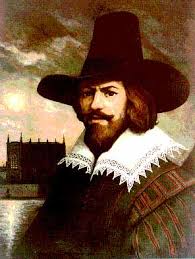
Abbot, I think, gave me credit for being a sort of infantine Guy Fawkes.
Hmm. That's a mash-up that no one's tried yet. Anyone up for Jane Eyre and Gunpowder?

Sunday, December 6, 2009

Correction

It was Miss Grey. But who doesn't need an excuse to reread Sense & Sensibility?

Grad school applications are in, and Cybils nominee blogging commences (finally!) this week.

Sunday, November 15, 2009

"...you will allow to be impossible, when you understand my affections have long been engaged elsewhere"


No, I'm not leaving you for a Miss Gray with 50,000 pounds.

Just admitting that I have to put blogging on hold for a few weeks. I have a grad school personal statement to write, and even though (or perhaps especially because) I'm not making much progress on it, I shouldn't spend that writing time on a blog post.

But I have loads of Cybils books to write about, along with the next few Trixie Beldens - not to mention thoughts on bookselling and politics and whatever else comes to mind - so be patient, por favor, and I'll be back soon.

(Post pic is me studying AP U.S. History back in high school, since I haven't been photographed hunting the elusive personal statement.)

Sunday, October 12, 2008

One of those times when Jane Austen demonstrates the opposite of advice

[The surrogate father] wished [the wannabe lover] to be a model of constancy; and fancied the best means of effecting it would be by not trying him too long.
- Mansfield Park, Chapter 35

Yup. When you're concerned about the callow youth's tendency to be fickle in love, the best way to avoid a problem is to not give him time to change his mind.

Leila picked up the book around the same time I did, so check in at Bookshelves of Doom for her updates.