Monday, July 23, 2012

Holmes Project: The Adventure of Silver Blaze

LinkLet's start with the opening line.
"'I am afraid, Watson, that I shall have to go,' said Holmes, as we sat down together to our breakfast one morning."
On the one hand, we're getting a picture of a happy domestic scene here -- it's not hard to imagine Holmes and Watson calmly decapitating eggs and tucking in to the early edition of the paper. But "Silver Blaze" was published after the Holmes stories had started to take off, so anyone familiar with the characters was likely to understand that "I shall have to go" is the prelude to Holmes taking on a case.

But before getting into the details, Holmes and Watson get themselves onto a train for points southwest, and then Holmes calculates their speed by how quickly the train passes telegraph posts. And then we start into the framing for the backstory -- not the history of the case itself, yet, but the context in which Holmes is going to tell Watson all about it.

First, we have some theoretical context:
"It is one of those cases where the art of the reasoner should be used rather for the sifting of details than for the acquiring of fresh evidence."
Which is, I suppose, a bit of a red herring, as the reasoner does in fact do some evidence-collecting later on.

And then a disclaimer:
"Because I made a blunder, my dear Watson -- which is, I am afraid, a more common occurrence than anyone would think who only knew me through your memoirs."
Disclaimer with a side of "hey, we're fictional characters discussing the works in which we appear."

And finally we get the lead-in to the actual story:
"At least I have got a grip on the essential facts of the case. I shall enumerate them to you, for nothing clears up a case so much as stating it to another person, and I can hardly expect your co-operation if I do not show you the position from which we start."
So we've got Holmes' own justification for a chunk of exposition that's necessary for the reader to know where things are going. A horse has gone missing, just before a race in which he's the favorite, and his trainer was found dead. Several people have been observed doing suspicious things, but none of them really make sense.

In the course of Holmes' monologue, one character is described as "doing a little quiet and genteel book-making in the sporting clubs of London." Isn't that an elegant way to depict a bookie?

There's another eye-catching line when it comes to describing the area they're headed to: "the little town of Tavistock, which lies, like the boss of a shield, in the middle of the huge circle of Dartmoor." (I consider this an appropriate point to insert a plug for Laurie R. King's The Moor. But as much as I love the Mary Russell books, I'm trying to stick with looking at Conan Doyle's writing here.)

Once Holmes and Watson arrive on the scene, we get one of the "Holmes is clearly up to something but we don't yet know what" moments:

"'Excuse me,' said he, turning to Colonel Ross, who had looked at him in some surprise. 'I was day-dreaming.' There was a gleam in his eyes and a suppressed excitement in his manner which convinced me, used as I was to his ways, that his hand was upon a clue, though I could not imagine where he had found it."
There's a lot of concrete detail among the clues, some of which probably had more resonance with Conan Doyle's original audience than it does today. I can't say I've met anyone who smokes "long-cut Cavendish," for instance, and it takes a bit of calculating to translate "Twenty-two guineas is rather heavy for a single costume" into real money. (Decimalization may have eliminated some fun terms for standard amounts of money, but it does make the currency far easier to comprehend.)

Conan Doyle takes a moment here to throw in a lovely descriptive line that fits nicely into the story, even though it has nothing to do with the case itself:
"The sun was beginning to sink behind the stable of Mapleton, and the long, sloping plain in front of us was tinged with gold, deepening into rich, ruddy browns where the faded ferns and brambles caught the evening light. But the glories of the landscape were all wasted upon my companion, who was sunk in the deepest thought."
Holmes is rather more focused on hypotheses, and Conan Doyle gives him another opportunity to explain how detection works:
"We imagined what might have happened, acted upon the supposition, and find ourselves justified."
Oh, and also:
"I follow my own methods, and tell as much or as little as I choose. That is the advantage of being unofficial."
It's also a good plan for a writer, no?

So even though Holmes has everything sorted out, Conan Doyle isn't going to let the reader know what he's thinking. And he gives Holmes a chance to show off, telling Colonel Ross that his missing horse will run in the upcoming race as expected, but the Colonel's just going to have to wait for it.
"'Yes, I have his assurance,' said the Colonel, with a shrug of his shoulders. 'I should prefer to have the horse.'"
And then, as Holmes is about to take his leave without providing any answers, Conan Doyle gives us one of his most famous passages:
"'Is there any other point to which you would wish to draw my attention?'
'To the curious incident of the dog in the night-time.'
'The dog did nothing in the night-time.'
'That was the curious incident,' remarked Sherlock Holmes."
And... scene. Always leave your audience wanting more.

We finally get the explanation four days later, when Holmes and Watson go to see the missing horse run its race. And it does run, even though it looks completely different from the last time it was seen.

And Conan Doyle allows Holmes, in a very arch way, to draw out the resolution of the story even more:
"But there goes the bell, and as I stand to win a little on this next race, I shall defer a lengthy explanation until a more fitting time."
Which he does, very neatly, accounting for lame sheep, dress purchases, and an illicit dye job, as well as the murderer -- who, he explains, was merely acting in self-defense.

(Full text)

Wednesday, July 11, 2012

The Sherlock Holmes project

Because I totally needed a reason to reread all the Holmes stories.

In Maps & Legends, Michael Chabon has an essay about Arthur Conan Doyle's Sherlock Holmes stories (and their universe, and the world of Sherlockians and fanfic and such that they spawned, which is the point of the essay, but not where I'm going here.

One of the things Chabon discusses as he builds to his point is level of Conan Doyle's writing in the stories -- "so much higher than it ever needed to be," he calls it. And it's not just good writing, it's writing that plays with form and narrative and metafiction. (In other words, the way Holmes and Watson know that they're characters within stories that the public is devouring, even as they go about their fictional lives. Let's have this be the last time I get all jargony here.)

So now that I've spent time focusing on Jane Eyre, Anne of Green Gables, The Witch of Blackbird Pond, and the men of Madeleine L'Engle, I think the Holmes stories will be my next big project. (And I do mean big. There are 56 of them, plus the novellas. We'll take it in small doses, shall we?)

First up: The Adventure of the Silver Blaze.

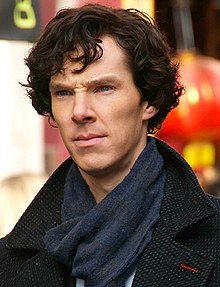
(Post pics: a passing resemblance, don't you think?)

Tuesday, July 10, 2012

Quick links

Monday, July 9, 2012

Words that work

When a piece of writing strikes you as brilliant two days after you finished the book, you know it's doing something right.

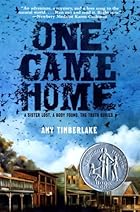
This is from Amy Timberlake's One Came Home.

"I froze. My body did, anyway.

"My mind, on the other hand, jumped over the moon and ran away with the spoon. It listed what it saw by every possible name. It thought the list forward: Catamount, cougar, American lion, painter, red tiger. It thought it backward: Red tiger, painter, American lion, cougar, catamount. My mind pinched the list in the middle, folded it over, an thought it again: Painter, cougar, catamount, red tiger, American lion.

"It distressed me to discover that running vocabulary lists was my mind's behavior during direst need."
(Besides the writing, this book also has some genius cover design on its side. The 1871 migration of passenger pigeons is one of the driving events of the book. Look at the title: Those letters, or at least the edges of them, are a great mass of wild pigeons. Nicely done, David Homer.)

Monday, June 18, 2012

And more links!

For research purposes: Georgian cookery (via Two Nerdy History Girls)
To be read whenever you need to be reminded that yeah, you are slacking off
More on the wonders of the typewriter shop
Why "good metadata" means something different for everyone involved

Monday, June 4, 2012

Oh, look. Links!


Colleen shares another of her fab publisher round-ups.
A reason to visit Amherst this month: Dickinson-poem-decorated sheds.
It's been a while since I've listened to dial-up.
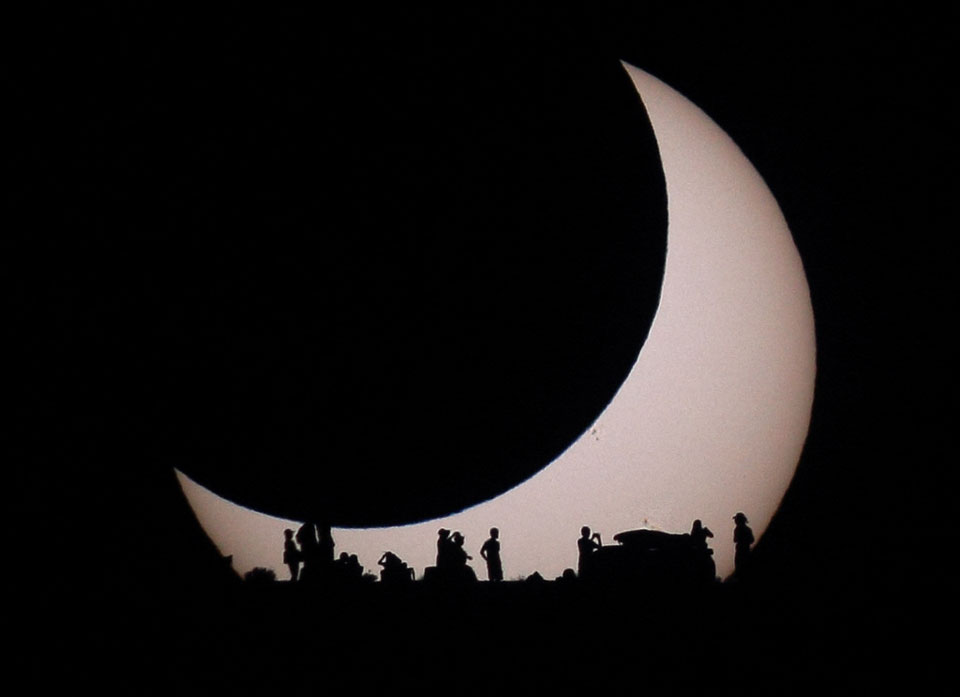
APOD rocks, as always. (And is the source of the post pic.)
NPR kicks off its summer YA series with a point-counterpoint on Gone With the Wind. (For reference.)
Gail reminds me that I still need to read True Grit. (I have seen the more recent movie version, though!)
David takes on the too-long book.
Unpacking the assumptions behind a Library of Congress classification. (via Debbie Reese)

Saturday, June 2, 2012

"Adolescence repressed by gin"

Never let it be said that I do not appreciate good snark. Especially the Victorian variety.

Something last week (probably a comment at Ta-Nehisi Coates' blog, but of course I didn't bother to note it at the time) prompted me to track down George Eliot's essay "Silly Novels by Lady Novelists."

Which, it turns out, is a little package of awesome.

For instance:

"We may remark, by the way, that we have been relieved from a serious scruple by discovering that silly novels by lady novelists rarely introduce us into any other than very lofty and fashionable society. We had imagined that destitute women turned novelists, as they turned governesses, because they had no other 'lady-like' means of getting their bread. On this supposition, vacillating syntax and improbable incident had a certain pathos for us, like the extremely supererogatory pincushions and ill-devised nightcaps that are offered for sale by a blind man."

"It is true that we are constantly struck with the want of verisimilitude in their representations of the high society in which they seem to live; but then they betray no closer acquaintance with any other form of life."

"symptoms so alarmingly like those of adolescence repressed by gin"

"Of course! Greek and Hebrew are mere play to a heroine; Sanscrit is no more than abc to her; and she can talk with perfect correctness in any language except English."

"We have often met with women much more novel and profound in their observations than Laura Gay, but rarely with any so inopportunely long winded."

"On the whole, however, frothy as it is, we rather prefer 'Rank and Beauty' to the two other novels we have mentioned. The dialogue is more natural and spirited; there is some frank ignorance, and no pedantry; and you are allowed to take the heroine's astounding intellect upon trust, without being called on to read her conversational refutations of sceptics and philosophers, or her rhetorical solutions of the mysteries of the universe."

"There seems to be a notion abroad among women, rather akin to the superstition that the speech and actions of idiots are inspired, and that the human being most entirely exhausted of common sense is the fittest vehicle of revelation."

"We are getting used to these things now, just as we are used to eclipses of the moon, which no longer set us howling and beating tin kettles."

"We are aware that our remarks are in a very different tone from that of the reviewers who, with a perennial recurrence of precisely similar emotions, only paralleled, we imagine, in the experience of monthly nurses, tell one lady novelist after another that they 'hail' her productions 'with delight.'"
Go read the whole thing. I'm going to try to figure out what "adolescence repressed by gin" looks like.