Wednesday, August 10, 2011

Chapter 17: Life goes on

Okay, I jumped the gun a bit in Chapter 16. This is where Anne and Diana make their meldramatic farewells.
"Ten minutes isn't very long to say an eternal farewell in"
Anne is devastated, though Marilla reminds her she's still got her wits:
"'I don't think there is much fear of your dying of grief as long as you can talk, Anne,' said Marilla unsympathetically."
Now that she's forcibly lost her best friend, Anne decides she might as well go back to school, where she can at least see Diana, even if they're not allowed to speak. And she's determined to be at the top of her class -- especially since that means she'll get to beat Gilbert Blythe.
"it was entirely good natured on Gilbert's side; but it is much to be feared that the same thing cannot be said of Anne, who had certainly an unpraiseworthy tenacity for holding grudges"
Also, one noteworthy allusion in this chapter:
"The Caesar's pageant shorn of Brutus' bust
Did but of Rome's best son remind her more."
That would be Anne (or at least the narrator) quoting from Byron's "Childe Harold's Pilgrimage" to describe her post-Diana emotions. Thematically appropriate, if perhaps a little implausible for an 11-year-old girl.

Chapter 16: A sad day at Green Gables

On one level, this chapter is about the rupture that occurs in the bosom friendship when Diana manages to get herself drunk.

At the same time, we get more insight into Marilla, and see how she subtly rebels against community norms.

Anne invites Diana over for tea while Marilla is out, giving them both a chance to play sophisticated grownup. Anne ("There are so many responsibilities on a person's mind when they're keeping house, isn't there?") plans the meal in exquisite detail, Diana ("looking exactly as it is proper to look when asked out to tea") very politely inquires after Marilla and Matthew -- and then they remember that they're little girls who don't have to act like that all the time.

Oh, and we get to hear about some of Anne's cooking disasters! "The last time I made a cake I forgot to put the flour in.... Flour is so essential to cakes, you know."

And then Diana starts to feel off, and decides to go home -- where her mother discovers that she's not sick, she's drunk. Because the three cups of raspberry cordial she had turned out to be currant wine.

Which was a total accident. Not a precursor to the Avonlea equivalent of beer pong. But Mrs. Barry totally doesn't care. Remember how Montgomery gave us a signal that Mrs. Barry was not entirely to be trusted when she was first introduced? There was a reason.
"Mrs. Barry was a woman of strong prejudices and dislikes, and her anger was of the cold, sullen sort which is always hardest to overcome. To do her justice, she really believed Anne had made Diana drunk out of sheer malice prepense, and she was honestly anxious to preserve her little daughter from the contamination of further intimacy with such a child."

"She was suspicious of Anne's big words and dramatic gestures and imagined that the child was making fun of her."
Result: Diana is banned from all contact with Anne. Both girls are devastated. Melodramatically so.Link
But back to the currant wine for a minute: It turns out that Avonlea residents are of the teetotalling strain of Calvinism, so Marilla's actually been rebelling against her neighbors by making it. (Although she doesn't go so far as to rebel against an official authority figure.)
"Well, this story will be a nice handle for those folks who are so down on me for making currant wine, although I haven't made any for three years ever since I found out that the minister didn't approve."
At least Marilla (in Lydia Pinkham mode) is able to laugh (discreetly) at the situation. Anne doesn't seem to believe she'll ever laugh again.

Tuesday, August 9, 2011

Chapter 15: A Tempest in the School Teapot

The post title for this chapter is the same as the actual chapter title, because it made such an impression on my when I first read the book. I hadn't yet come across the phrase "tempest in a teapot," so I didn't understand the play on words, but there was something about the rhythm or the imagery of it that stuck with me.

Anyway.

There are a lot of great lines in this chapter, so let's do a quick summary and then get into those.

Anne puts in her first appearance at Avonlea school -- coincidentally, on the same day that Gilbert Blythe gets back to town. Gilbert decides that the best way to get the attention of a redhead is to call her "Carrots," and is informed otherwise by means of a slate connecting with his skull. The situation is not improved by an incompetent teacher who singles Anne out for punishment -- and even worse, misspells her name -- and the chapter ends with Anne deciding that she's not going back there any time soon.

And the good bits:
  • "The little girls of Avonlea school always pooled their lunches, and to eat three raspberry tarts all alone or even to share them only with one's best chum would have forever and ever branded as 'awful mean' the girl who did it. And yet, when the tarts were divided among ten girls you just got enough to tantalize you."
  • "'Not that lovers ever really walk there,' she explained to Marilla, 'but Diana and I are reading a perfectly magnificent book and there's a Lover's Lane in it. So we want to have one, too.'"
  • "if you were quiet—which, with Anne and Diana, happened about once in a blue moon"
  • "'I guess Gilbert Blythe will be in school today,' said Diana. 'He's been visiting his cousins over in New Brunswick all summer and he only came home Saturday night. He's AW'FLY handsome, Anne. And he teases the girls something terrible. He just torments our lives out.'... Diana's voice indicated that she rather liked having her life tormented out than not."
  • "Gilbert Blythe wasn't used to putting himself out to make a girl look at him and meeting with failure."
  • "And then—thwack! Anne had brought her slate down on Gilbert's head and cracked it—slate not head—clear across."
  • "'Oh how could you, Anne?' breathed Diana as they went down the road half reproachfully, half admiringly. Diana felt that SHE could never have resisted Gilbert's plea."
  • "Diana hadn't the least idea what Anne meant but she understood it was something terrible."
  • "Mr. Phillips's brief reforming energy was over; he didn't want the bother of punishing a dozen pupils; but it was necessary to do something to save his word, so he looked about for a scapegoat and found it in Anne"
  • "Once, when nobody was looking, Gilbert took from his desk a little pink candy heart with a gold motto on it, "You are sweet," and slipped it under the curve of Anne's arm. Whereupon Anne arose, took the pink heart gingerly between the tips of her fingers, dropped it on the floor, ground it to powder beneath her heel, and resumed her position without deigning to bestow a glance on Gilbert."
  • "Marilla saw something remarkably like unyielding stubbornness looking out of Anne's small face. She understood that she would have trouble in overcoming it; but she re-solved wisely to say nothing more just then."
  • "'Well, since you've asked my advice, Marilla,' said Mrs. Lynde amiably—Mrs. Lynde dearly loved to be asked for advice"
  • "'I love Diana so, Marilla. I cannot ever live without her. But I know very well when we grow up that Diana will get married and go away and leave me. And oh, what shall I do? I hate her husband—I just hate him furiously. I've been imagining it all out—the wedding and everything—Diana dressed in snowy garments, with a veil, and looking as beautiful and regal as a queen; and me the bridesmaid, with a lovely dress too, and puffed sleeves, but with a breaking heart hid beneath my smiling face.'"
  • "Marilla turned quickly away to hide her twitching face; but it was no use; she collapsed on the nearest chair and burst into such a hearty and unusual peal of laughter that Matthew, crossing the yard outside, halted in amazement. When had he heard Marilla laugh like that before?"

Monday, August 8, 2011

What I do

(When I'm not blogging about old books, of course.)

I know I sound like a pretentious twit when I say this, but I kind of don't get people who aren't news junkies.

This is not new. But I was reminded of it tonight courtesy of a tweet from a friend who had been unaware that riots are currently happening in London and other English cities.

No matter how much I say I'm not judging her for that, you're free to start the name-calling now.

That's why I can't imagine having the experience my parents did two summers in a row:

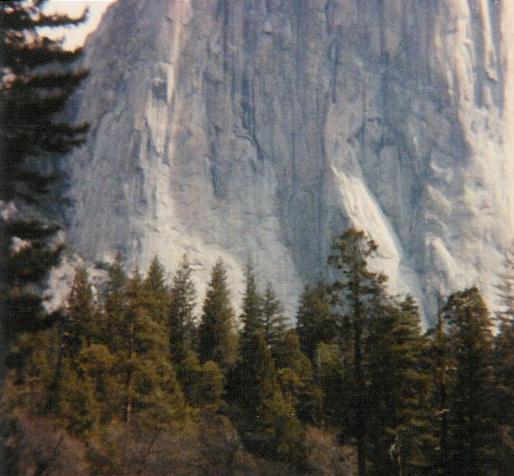
We went on August road trips, to the Four Corners area in 1990 and Yosemite Lake Tahoe in 1991. Both lovely places, remote in parts, but hardly cut off from the world.

And both times, my parents (and the rest of us, but as I was still in the single digits I can't take too much credit) figured out that something big had happened during those trips when they stopped at a gas station and found the prices much higher than the last time they'd filled up.

Something big, August 1990: Iraq invaded Kuwait.
Something big, August 1991: A Soviet coup briefly deposed Gorbachev.

And somehow, when those events happened, we didn't have a newspaper. We hadn't turned on NPR. (I didn't grow up with TV news, so that one's not surprising. And yes, y'all, this was pre-Internet. I'm old.)

We were on vacation, and it didn't occur to my parents that some kind of news consumption was an essential part of our day. That's a choice I just don't see myself making.

I check news sites first thing in the morning. On a day like today, I had the NYT front page up in a tab all day. And let's not even talk about how often I check Twitter.

This isn't just a generational thing; the Internet is just the most current mode of information transfer. What I do -- what I want to do -- is know what's going on and tell other people about it.

It was, to some extent, what I did when I was at ABA. (That was the external side. The internal side involved a lot of me popping into my boss' office to share the latest industry nonsense developments, and it was a hit.)

If Andy Carvin didn't exist, I'd want his job. (Unfortunately, I was not hired when I said that, more elegantly, when I interviewed at NPR.)

This is what I do. In some form, it's what I will always do, whether or not it's part of my job description.

But if someone wants to pay me to do it, I wouldn't say no.

(Post pics are -- assuming I labeled them correctly -- from the 1991 Yosemite trip. Taken with a magenta flip-flash camera, baby!)

[Update, 8/9: So much for my steel-trap memory. A conversation with my mom tonight led to us determining that the August 1991 trip was, in fact, to Lake Tahoe. We spent a long weekend or something like that at Yosemite in the spring of that year. No breaking news during that vacation; it was mostly memorable for my first-ever coyote sighting. In addition to name-calling, you are also now free to mock.]

Sunday, August 7, 2011

Chapter 14: Accused, confessed, and vindicated

Marilla's brooch (go back to Chapter 13 if you're confused) has gone missing.

Anne saw it. In fact, she picked it up and played with it, even though she wasn't supposed to. Which makes her, in Marilla's eyes, the guilty party.

Which Anne steadfastly denies.
"I never took the brooch out of your room and that is the truth, if I was to be led to the block for it—although I'm not very certain what a block is. So there, Marilla."
Result: Anne is confined to her bedroom until she confesses -- which means, if she doesn't, missing the Sunday School picnic. (Again, Chapter 13.) Which means she's in the depths of despair -- oh, and refusing
"Boiled pork and greens are so unromantic when one is in affliction."
Matthew, incidentally, is the person who listens to this particular plaint, which sticks with him when he goes down to his own dinner:
"mournfully surveying his plateful of unromantic pork and greens as if he, like Anne, thought it a food unsuited to crises of feeling"
Marilla has her doubts, but she's not willing to share them. She reminds Matthew that the whole child-raising thing is her business, thank you very much.
"The retort silenced Matthew if it did not convince him. That dinner was a very dismal meal. The only cheerful thing about it was Jerry Buote, the hired boy, and Marilla resented his cheerfulness as a personal insult."
Result: Since she's not allowed out of her room until she confesses, and she desperately wants to go to the picnic, Anne decides to make up an elaborate confession, the upshot of which is dropping the brooch into the pond during a romantic reverie.

Which, understandably, displeases Marilla. As punishment, Anne's not allowed to go to the picnic after all, prompting moans of unfairness.

Until Marilla discovers that the brooch has, in fact, gotten caught in her shawl, and has been hiding in the closet for the past two days. Much apologizing ensues, Anne goes to the picnic, and all is well again.

Chapter 13: Marilla's first kiss


This chapter is mostly a setup for Chapter 14. The salient details are this: Anne's excited about the Sunday School picnic, and Marilla has a brooch that's her one nice piece of jewelry.

That said, there's still some good stuff here.
  • Good idiom: nineteen to the dozen, as in Marilla's "now she's perched out there on the woodpile talking to Matthew, nineteen to the dozen, when she knows perfectly well she ought to be at her work." The Annotated Anne claims that this means "for every dozen words a normal person can speak, Anne can cram in nineteen." That seems a bit too specific for a common phrase, and other etymology sources just say it means doing something fast (and may have come out of the mechanization of coal mining -- your trivia tidbit for the evening).
  • Good Anne-phrase: "just little young rainbows that haven't grown big yet." Don't you want to pick them up and cuddle them?
  • Good bonding:"It was the first time in her whole life that childish lips had voluntarily touched Marilla's face. Again that sudden sensation of startling sweetness thrilled her. She was secretly vastly pleased at Anne's impulsive caress, which was probably the reason why she said brusquely..."
  • Good description: Even if you had no idea what an amethyst looked like, you'd understand what Anne's on about: "They are what I used to think diamonds were like. Long ago, before I had ever seen a diamond, I read about them and I tried to imagine what they would be like. I thought they would be lovely glimmering purple stones. When I saw a real diamond in a lady's ring one day I was so disappointed I cried."
So: picnic and brooch. Remember those.

Thursday, August 4, 2011

Chapter 12: Bosom friends

I had such lofty dreams of illustrating this post with images of all the flowers Montgomery lists in Mrs. Barry's garden:
"There were rosy bleeding-hearts and great splendid crimson peonies; white, fragrant narcissi and thorny, sweet Scotch roses; pink and blue and white columbines and lilac-tinted Bouncing Bets; clumps of southernwood and ribbon grass and mint; purple Adam-and-Eve, daffodils, and masses of sweet clover white with its delicate, fragrant, feathery sprays; scarlet lightning that shot its fiery lances over prim white musk-flowers"
Which would be lovely. But I also thought it might be nice to get this post published before Christmas.

So. This is the chapter in which we meet one of the other key players in Anne's life. It takes about two minutes for Anne and Diana Barry to become fast friends.

But first we meet Mrs. Barry, and if you know what comes later, you'll see that she's very deliberately being set up as an unsympathetic character here.
"She reads entirely too much—" this to Marilla as the little girls went out—"and I can't prevent her, for her father aids and abets her."
So things are good in Avonlea, on many levels. Which is something Marilla comes very close to admitting herself:
"I will say it for the child," said Marilla when Anne had gone to her gable, "she isn't stingy. I'm glad, for of all faults I detest stinginess in a child. Dear me, it's only three weeks since she came, and it seems as if she'd been here always. I can't imagine the place without her. Now, don't be looking I told-you-so, Matthew. That's bad enough in a woman, but it isn't to be endured in a man. I'm perfectly willing to own up that I'm glad I consented to keep the child and that I'm getting fond of her, but don't you rub it in, Matthew Cuthbert."